

Usage
Open Settings → Usage. It is for billing managers, and the same view also sits under Analytics → Usage. The date range picker in the header drives every chart on the page, with presets from the last 24 hours out to the last three years, plus year to date and a custom range.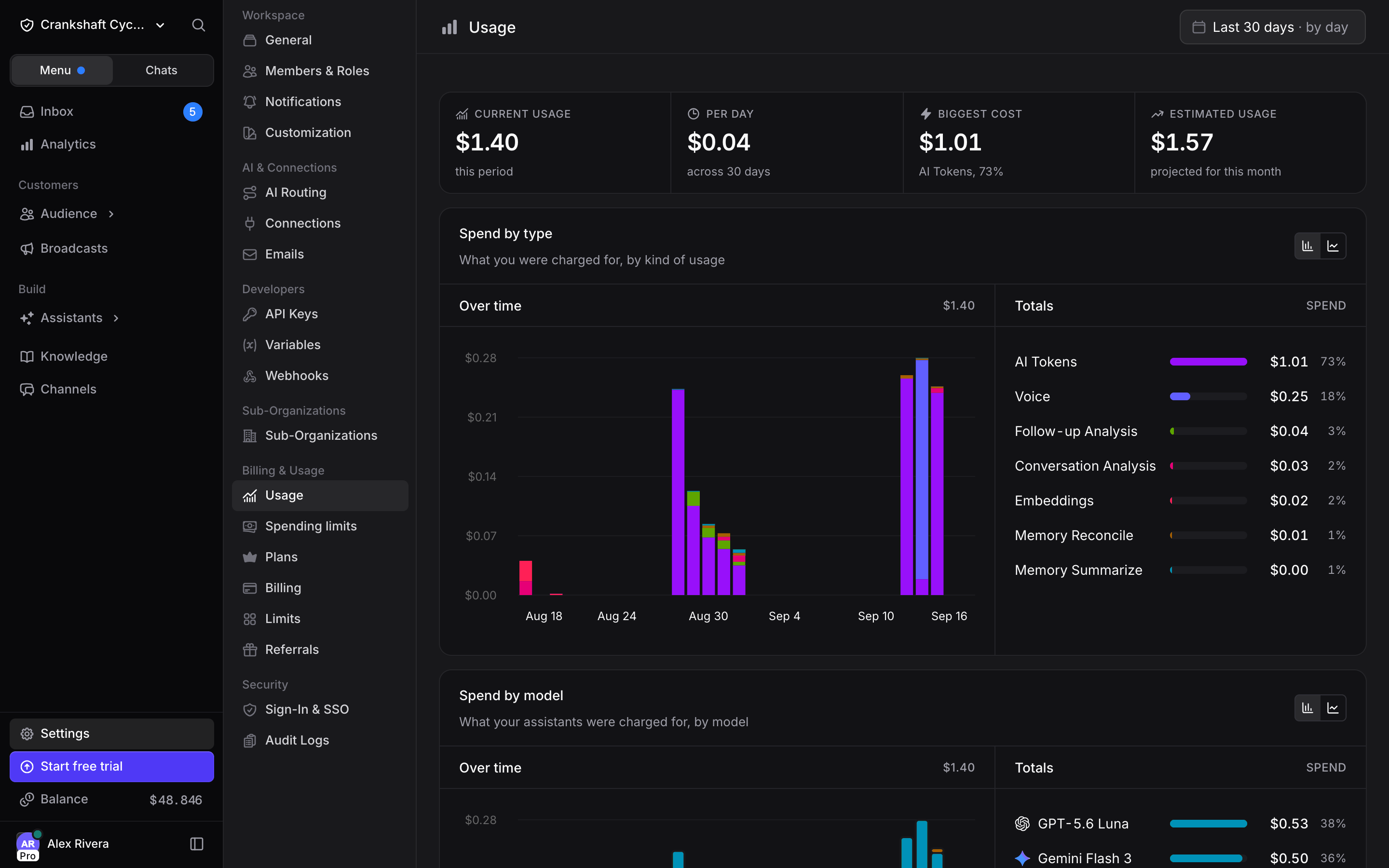
- Current usage, in dollars.
- Per day, the average across the days in the range.
- Biggest cost, the kind of usage you paid the most for, with its share of the total.
- Estimated usage, what this calendar month will cost if usage continues at the rate so far.
Where the money went
Spend by type breaks the same range down by what produced the spend: a stacked chart over time on the left, and a total per type with its share on the right. Use the controls in the corner to switch between bar and line, show cumulative totals or shares, and export the underlying numbers as CSV.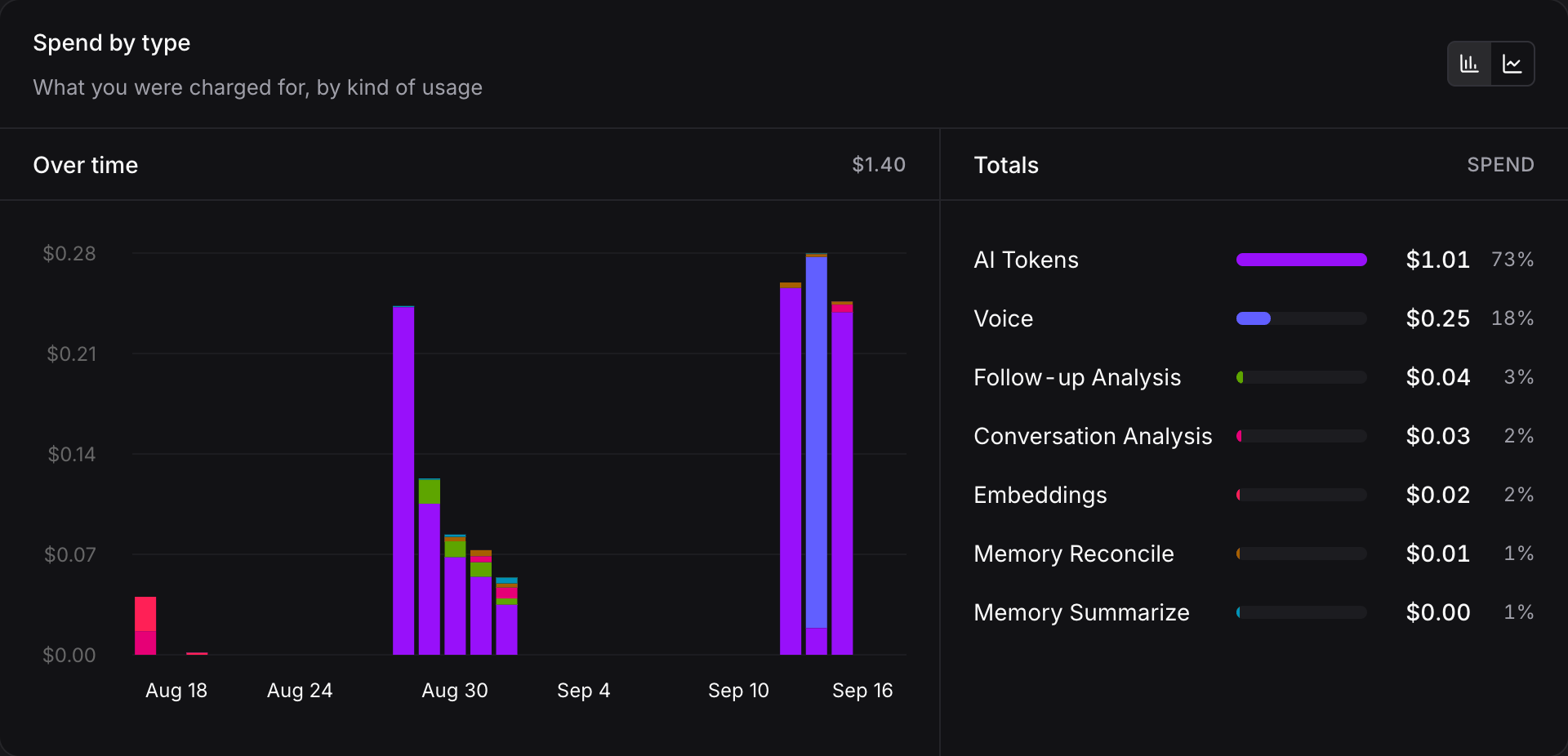
Spend by model does the same split by AI model, so you can see what switching a model would change.
Spend by member and Spend by assistant show who the AI spend went to: what each member spent in their chats, and what each assistant spent replying to customers.
The Budget card at the bottom puts the spend next to its ceilings: your available balance with the auto-recharge status, and how much of the organization’s spending cap is used, or No cap when none is set.
Spending limits
Open Settings → Spending limits (billing managers only) to decide who may spend how much each month. The page starts with the organization limit, the same one Billing shows, then a Members card and an Assistants card. Each row shows what it spent this month.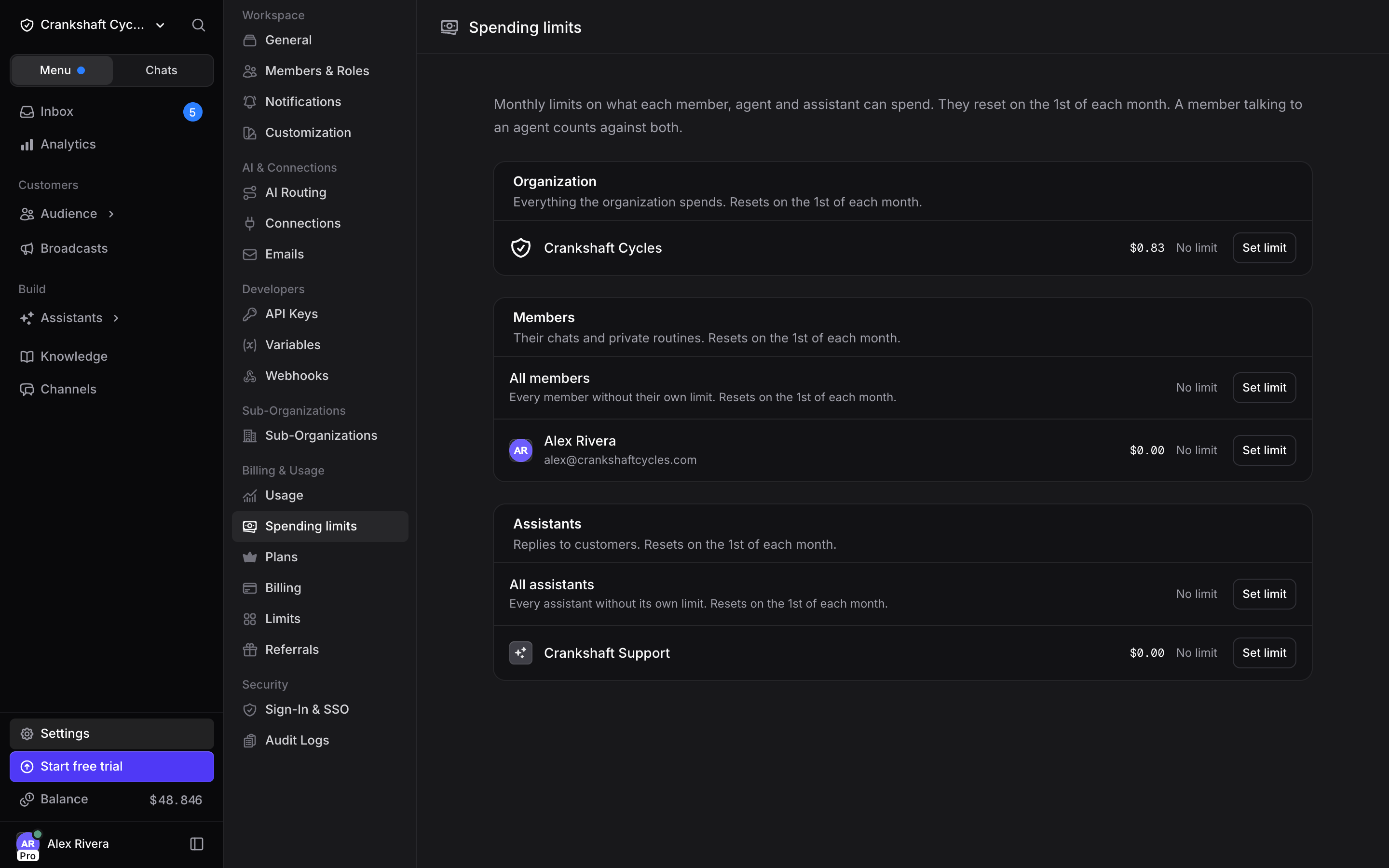
- Organization: everything the organization spends.
- Members: what each member spends in their chats.
- Assistants: what each assistant spends replying to customers.
Limits
Open Settings → Limits for the ceilings that come with your current plan.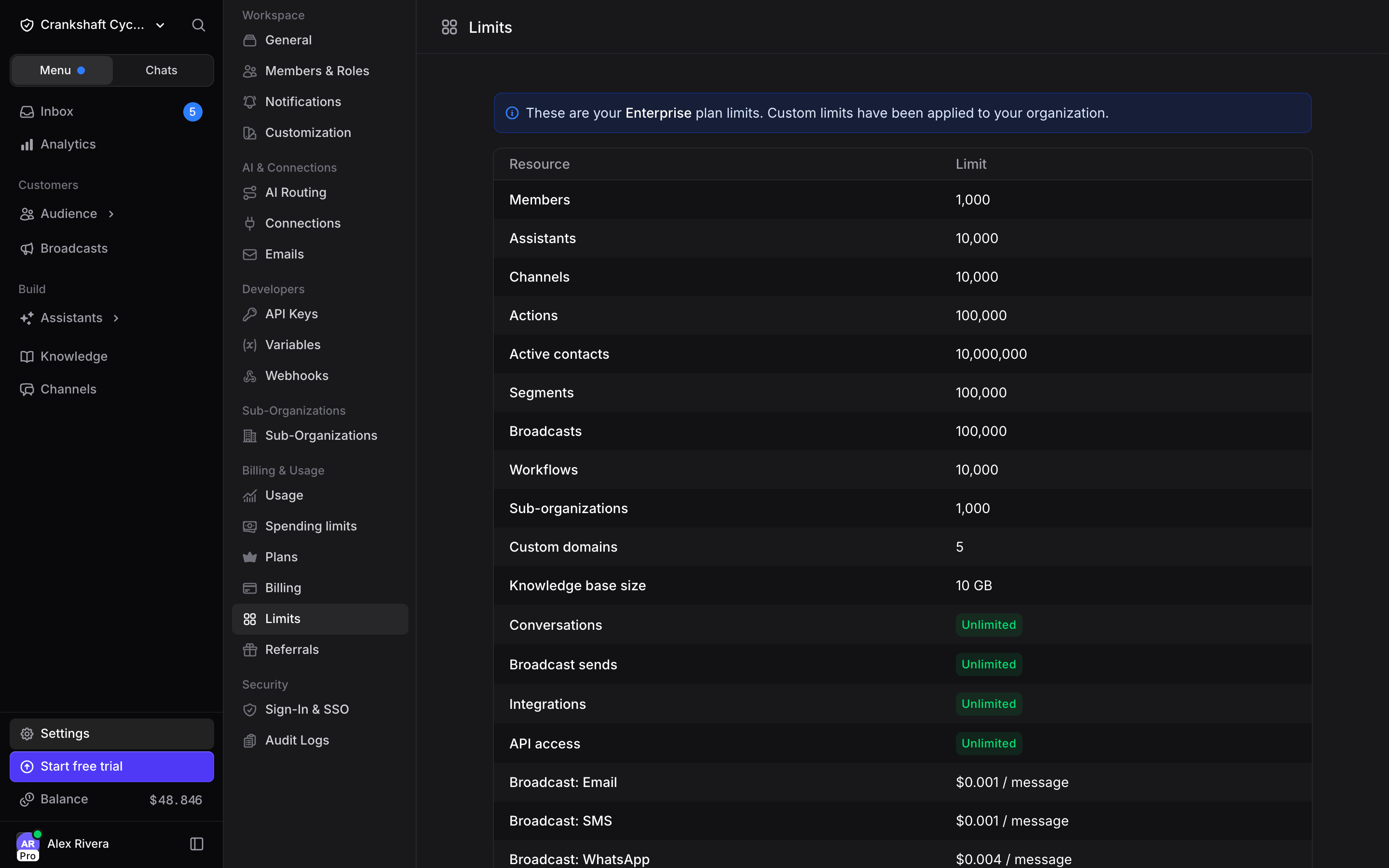
Limits follow your plan, so upgrading raises them immediately. If your workspace needs more than the listed ceilings, the banner at the top of the page points to Enterprise, where limits are set per workspace.
Keeping spend predictable
Usage and limits are only half the picture. The controls that actually cap what you can spend live in billing:- A monthly spending limit pauses billable operations once the organization’s cap is reached.
- Per-member and per-assistant limits on Spending limits stop one member or one assistant without pausing everyone else.
- Auto-recharge tops the balance up when it dips below a threshold, so sends do not stall.
Next Steps
Pricing and Plans
Rates, plans, spending limits and auto-recharge
Sub-Organizations
Track usage and caps per client or team